
The Bread At Table Fourteen
The waiter set the plate in front of me like an apology he was too polite to say out loud.
One piece of bread.
Dry, pale, and already cracking along the crust.
No butter. No oil. No knife. No small dish of rosemary salt like the one on every other table. Around me, two hundred guests at the Maramon estate lifted silver forks over filet mignon, roasted asparagus, and glossy little potatoes arranged on white china. Red wine caught the candlelight. Champagne glasses shivered under chandeliers. The smell of beef, rosemary, and warm bread drifted from every direction, heavy enough to make my mouth react before my mind could stop it.
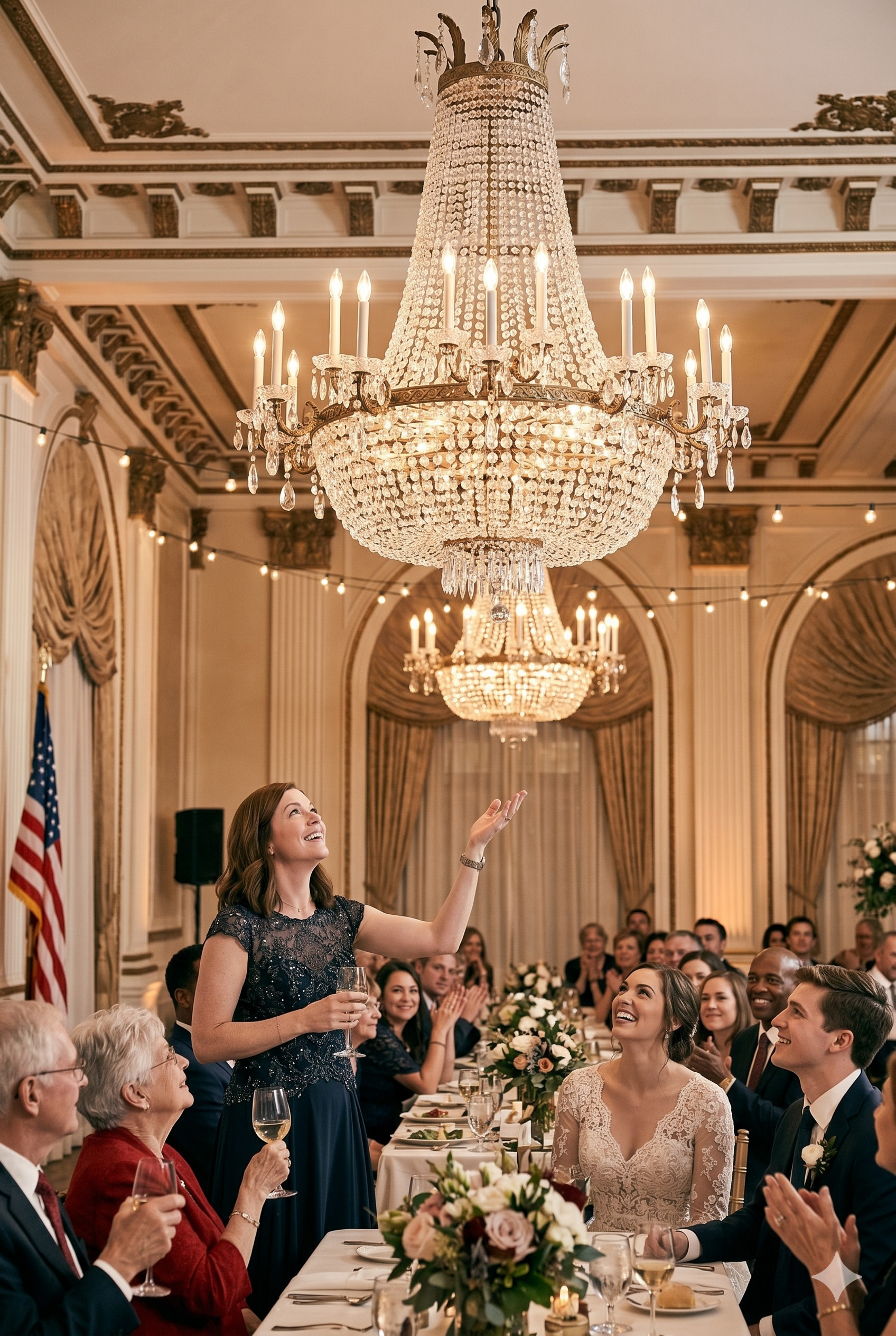
I sat at table fourteen, near the kitchen doors.
Every time a server pushed through them, a rush of heat and clattering dishes touched the back of my neck. Darcy had assigned the seating herself. She had told me this on the phone three weeks earlier, her voice bright and careful in the way people sound when they are hiding a blade under a ribbon.
“I put you somewhere cozy, Gem-Gem,” she had said. “Near the back, so you won’t feel overwhelmed.”
She came by now, halfway through the rehearsal dinner, her train gathered in one hand and the other hand holding a champagne flute as if she had been born with one. She paused at my table and looked at my plate. Her lips pressed together in that shape that was not quite a smile but had learned to do the work of one.
“Oh, Gem-Gem,” she said. “I told them to give you something special.”
Two women at my table, friends of Troy’s mother, glanced at each other.
I pressed my thumb against the bread crust. It crumbled, dry as chalk.
Then my mother appeared.
Lorine Holt had a way of materializing at the exact moment a hurt was fresh, like she could sense it through walls. She leaned close, her perfume sharp and floral, her fingers gripping my shoulder. To anyone watching, she looked like a mother comforting her daughter.
Her mouth came next to my ear.
“That’s all you deserve,” she whispered, her voice flat and private. “You couldn’t even keep a marriage together. Be grateful you got an invitation.”
She straightened, patted my shoulder, and moved on.
Darcy was already three tables away, laughing. The server who had brought my bread had vanished.
I sat there with my hands flat on the tablecloth, the bread plate in front of me and an empty water glass that nobody had filled. The band was playing something with brass, a song about love and permanence and promises, the kinds of promises my family had never learned how to keep.
I cataloged it all.
The bread. The placement near the kitchen. The empty glass. My sister’s custom gown with hand-stitched lace that cost more than three months of my rent. My mother’s new pearl earrings, a gift from Troy’s family, which she touched every few minutes in the way people touch things they are afraid of losing. The centerpiece on my table was smaller than the others, cheaper flowers arranged in a lower vase. Even the decoration had been rationed.
I cataloged it all, and I did not speak.
That was the trick with my family. Speak, and they would use the words against you. Stay quiet, and they would read the silence however they wanted. Either way, they won.
That was Friday evening, the rehearsal dinner. The wedding itself was the next day, Saturday. By Saturday night, two hundred guests would be sitting in that same ballroom, watching a screen light up with information that would turn Darcy’s face the color of cold wax.
But I did not know that yet.
On Friday night, all I had was a plate of dry bread and the familiar weight of being the daughter who showed up, spent too much on the gift, and sat where she was told.
My name is Gemma Holt. I was thirty-three, divorced for eight months, living in a one-bedroom apartment in Raleigh where the radiator whistled every night at two in the morning and the walls were thin enough to hear my neighbor’s cat crying for food.
I worked as a forensic accountant at a firm called Whitlock and Associates. CPA. CFE. The kind of credentials that make people’s eyes glaze over at dinner parties, which was fine, because nobody at dinner parties ever asked me what I did anyway. Especially not my family.
My father, Glenn Holt, had died three years earlier. Four months from diagnosis to funeral. In those four months, I drove to Charlotte every weekend, sat in his hospital room, read him newspaper articles about college football, and fed him ice chips when he could no longer swallow water.
Darcy visited twice.
Lorine visited daily, but spent most of that time in the hallway speaking with the estate attorney about the trust.
Glenn was the only person in the Holt family who looked at me and saw someone worth looking at. Before he passed, he set up a trust for me and Darcy, split fifty-fifty, managed by a trustee he appointed. After he died, my mother petitioned the court to become trustee herself.
I did not fight it.
I was deep in my divorce from Paul, a man who left our marriage the way people leave hotel rooms, taking what was his and not looking back. I did not have the strength to fight on two fronts. I signed the consent form and told myself it would be fine.
My mother would handle the trust.
She was my mother.
I drove three hours to the estate that Friday. I almost turned around twice. Once near Burlington, when the gas light came on and I had to decide if the trip was worth the thirty-eight dollars it would cost to fill the tank. Again on the long stretch past Greensboro, where the pines crowded the highway and the exit signs offered the possibility of simply going somewhere else.
In my trunk was a crystal vase, four hundred dollars, wrapped in tissue paper I had bought from a craft store because the department store gift wrap was another fifteen.
That was the kind of math I did now.
The math of a woman whose ex-husband got the house, the good credit score, and most of the furniture, leaving her with a one-bedroom apartment and a radiator that would not quit.
The vase was too expensive. The price tag said four hundred dollars. My checking account said six hundred and twelve.
But the old pattern held.
Spend more than you can afford. Hope it translates into love. Watch it fail.
I had been running that same transaction since childhood. Piano recital programs framed for my mother. Father’s Day cards with hand-drawn borders. A savings bond I bought Darcy for her high school graduation that cost me my entire summer job earnings. Each one was a deposit into an account that never accrued interest.
I checked in at a Hampton Inn twelve miles from the estate because the on-site rooms had been reserved months earlier for guests who mattered. Then I drove to the rehearsal dinner in a consignment-shop dress, black and simple, the kind of dress that says, I am here, but I am not competing.
I had learned to dress that way early.
Any attempt at elegance around Darcy was interpreted as aggression.
The rehearsal dinner was where the bread happened. After Darcy’s toast, where she thanked everyone who had made the weekend possible without once glancing in my direction, and after my mother air-kissed a line of Troy’s relatives, while I carried my own bread plate because the servers had apparently been told table fourteen was self-service, I went outside.
The hedge row smelled like boxwood and recent rain. The night was warm for October, the kind of Carolina evening where humidity hangs in the air like something half said.
My phone buzzed.
The text was from Reese Callahan, my college roommate from NC State. We had kept in touch the way women do when their twenties burn away and friendship becomes birthday texts and occasional calls that last too long because there is too much to catch up on. Reese lived in Charlotte now and worked in banking compliance, spending her days making sure other people’s numbers added up.
Her message read: Hey, weird question. Is your sister marrying Troy Prescott? The one in commercial real estate? Call me. Not over text.
The space between reading a message and making the call can feel like a long time.
I looked at the text twice. Cocktail noise drifted from inside the ballroom, laughter and clinking glasses and someone calling for another toast.
I called.
Reese picked up on the first ring, which meant she had been sitting with her phone in her hand waiting for me.
“I flagged something at work,” she said. Her voice had the careful edge it got when she was talking about numbers that did not behave. “His company. Prescott Capital Partners. There are transfers that don’t make sense. Large sums moving into an entity tied to your family’s trust.”
I pressed the phone harder against my ear. A couple walked past me on the gravel path, laughing, their shoes crunching under them.
“I can’t give you details,” Reese said. “Compliance rules. You know how it is. But if I were you, I would pull your father’s trust documents tonight. Before the wedding.”
“Reese, what are you saying?”
“I’m saying somebody is moving money out of your inheritance, Gemma. And it has been happening for over a year.”
I went back inside.
I smiled at my mother.
I ate the bread. Every dry bite of it, because that was the language I had been speaking my whole life.
Take what they give you. Say thank you. Swallow.
Then I drove to my hotel room and opened the box I had kept in my trunk.
I had been meaning to donate my father’s papers for months. Old files, bank statements, trust documents, manilla folders with his handwriting on the tabs, all of it crammed into a cardboard box that still smelled faintly like his office at the plant: oak desk, cold coffee, and the mechanical pencils he kept in a cup by his phone.
I had not been able to let it go. The box rode in my trunk through the divorce, through three apartment moves, through a year of telling myself I would deal with it next weekend.
Now I was glad I never had.
The trust amendment was near the bottom, underneath his tax returns and a folder of old birthday cards I had sent him. A single page, dense with legal language I could not fully parse at eleven at night in a hotel room with fluorescent lighting and thin walls.
But I could read numbers.
Numbers are the language I speak fluently when everything else fails.
The original trust split everything fifty-fifty between Gemma and Darcy. Filed while my father was alive. Notarized. Clean. His signature at the bottom, the slanted G and H I would recognize anywhere.
Then the amendment.
Filed six months after his death.
Darcy’s share: eighty-five percent.
Gemma’s share: fifteen percent.
Authorized by trustee Lorine Holt.
I sat on the hotel bed with the paper in my hands.
Fifty to fifteen.
Thirty-five percentage points carved out of my inheritance and handed to my sister while I was drowning in divorce proceedings and sleeping on an air mattress because Paul kept the furniture.
Nobody told me about the amendment. Nobody asked my consent.
I learned it in a hotel room on the night before my sister’s wedding because a college friend happened to work at the right bank.
I opened my laptop.
My fingers moved before my mind agreed to the plan. State business registry. Prescott Capital Partners LLC. Formed fourteen months earlier. Registered agent: Troy Prescott. Principal office: an address in Raleigh that matched a virtual mailbox service I had seen in financial misconduct cases, the kind you rent when you want an address that sounds legitimate but does not have walls.
I cross-referenced the trust account statements I had in the box. During probate, my mother had made me the executor’s assistant because it involved work and she did not want to do it. I had copies of every statement from the first eighteen months after Glenn’s death.
The transfers materialized on my screen.
February: $47,000.
May: $62,000.
August: $38,000.
All to Prescott Capital Partners LLC.
All authorized by trustee Lorine Holt.
Forty-seven thousand dollars was roughly what I earned in a year after taxes. Someone had moved that amount in a single transaction while I was calculating whether I could afford to keep my streaming service because it helped me fall asleep.
I stood at the window. The hotel parking lot was empty except for my car and a pickup truck with a landscaping trailer. The highway beyond the lot was dark. Somewhere south of there, my apartment sat empty, the radiator cooling, my forensic accounting certificates hanging above a desk where I had done work for hundreds of clients and never once turned those skills on my own family.
That was the thing about trust. Not the legal instrument. The other kind. The kind you give people who share your blood, your last name, your memories of Christmas mornings and your father’s laugh.
I had trusted my mother to be my mother.
She had used that trust like a resource to be extracted.
I called Reese at one in the morning. She picked up immediately, which meant she had not slept either.
“Prescott Capital Partners,” I said. “I found the transfers.”
“How much?”
“A hundred forty-seven thousand so far. Three transfers. February, May, August.”
A pause. The pause of someone doing math.
“Then those are quarterly,” she said. “He’s on a schedule. Check investor disclosures. If Troy is taking money from a family trust and putting it into his fund without proper disclosure, that is not just sloppy. That is a serious problem.”
Reese told me something else that night. Her voice changed, went quieter, the way it did in college when she talked about growing up in Asheville with a father who smiled at neighbors and mistreated clients’ accounts.
“My dad ran an insurance scheme for six years,” she said. “I reported him when I was twenty-three. My family has not spoken to me since. My mother sends a Christmas card every year with no return address. My sister blocked my number.”
She let the silence hold.
“I know what it costs to tell the truth about family,” she said. “I also know what it costs to stay quiet.”
Then she gave me one more breadcrumb.
“Check the Wake County filings. Lien disputes are public record. If Troy’s entity has any filed against it, there might be documents attached as exhibits. Emails. Correspondence. Things people forget become public when they are filed with a court.”
I searched at two-thirty in the morning, running on hotel coffee that tasted like rust and determination.
I found it: a contractor lien dispute filed against Prescott Capital Partners over renovations to an office on Glenwood Avenue. The contractor claimed twenty-eight thousand dollars in unpaid work. Troy filed a response, and attached to the filing as exhibits were emails.
Emails between Troy Prescott and Lorine Holt.
I read them with the same careful attention I bring to client audits, where every comma is potential evidence and every number is a story.
The emails were casual. Businesslike. The correspondence of two people running a process they considered routine.
From Troy in March: The Q1 transfer is ready. I’ll file the distribution report after it clears.
From Lorine in March: Just process the transfer. She won’t notice. She never checks.
She.
Me.
The daughter who was too busy drowning in a divorce to look at trust statements. The daughter who had signed a consent form and trusted her mother.
From Troy in July: The fund needs another infusion before the next investor report. Can we move 175K?
From Lorine in July: Do it, but keep the transfers under 150K each. Split it if you have to.
They were deliberately breaking transfers into pieces. That was not carelessness. That was awareness.
By three in the morning, I had the full picture.
Troy’s fund was not what he claimed it was. Investor returns were being paid with new investor money, the oldest structure in the history of financial deception. The Holt family trust—my inheritance—had been the single largest source of capital.
Total moved from the trust over eighteen months: $284,000.
My rightful share of that money under the original terms: $142,000.
The county filings confirmed what the numbers already told me. Lorine’s name was on every authorization. Troy executed the transfers. The money that was supposed to be mine—the money my father set aside before illness took his voice and then his life—had paid for this wedding.
The venue deposit. The catering. The flowers. The custom gown with hand-stitched lace. The filet mignon on two hundred plates.
Every plate except mine.
I sat back in the hotel chair. The room was silent except for the ice machine humming through the wall. My laptop screen glowed blue.
I picked up the crust of bread I had wrapped in a napkin and brought back to the room. I do not know why I took it. Maybe because it was evidence of what they had been doing all along.
I set it on the desk beside my laptop.
$284,000.
$142,000 of it mine.
And a piece of dry bread bought with money my father meant for me.
I did the math one more time because math is where I live when the rest of me cannot function.
$142,000 divided by my annual salary: roughly three years of work.
$142,000 divided by my monthly rent: nearly ten years of housing.
$142,000 divided by the $400 crystal vase I had wrapped in craft-store tissue paper and delivered to a sister who mocked it in front of her friends: three hundred fifty-five vases. Three hundred fifty-five gestures of love purchased with money my father intended for me, given to a woman who served me bread.
The math did not make me feel better.
It made the shape of the betrayal specific. It gave it edges I could hold.
That was enough.
I did not sleep.
Instead, I opened a presentation program and began building a video. This was my language. Screen recordings of public filings. The original trust and the amendment side by side. Transfer records dated and sourced. Emails highlighted and annotated. Clean slides. Professional formatting.
The kind of work I do for clients who pay me to make financial nightmares visible to judges, partners, and boards.
The work calmed me the way it always does.
This was the part of my life that functioned correctly. The part where my brain was an asset and not a liability. The part where the skills I had spent a decade developing mattered, and nobody called them boring or looked at their phone while I explained what I had found.
Documents do not lie or perform or serve you bread while smiling.
A transfer record is a transfer record. An email is an email. The evidence says what it says, and no amount of charm or beauty or golden-child status can make $284,000 in unauthorized transfers disappear from a ledger.
I built the video the way I build every forensic presentation.
Start with the original agreement.
Show the deviation.
Follow the money.
Let the trail speak.
The audience for this one would not be a judge or a jury or a partner at an accounting firm. It would be two hundred wedding guests in formal wear, holding champagne, sitting at tables decorated with flowers bought with misused trust money.
But the structure was the same.
Truth is truth, regardless of the venue.
By seven in the morning, I had a twelve-minute video. Airtight. Clean. Devastating.
I exported it to a USB drive.
I showered. The water pressure at the Hampton Inn was better than in my apartment, which registered in that raw, oversensitive way everything registers when a life starts comparing what it was given with what it should have had.
I put on the dress I had bought for the wedding. Navy blue, modest, high neckline, sensible heels. The kind of dress invisible daughters wear to golden sisters’ weddings.
In the bathroom mirror, I saw what my family always saw: a woman who faded into the background by design, who dressed to disappear, who took exactly the amount of space she had been allocated and not a centimeter more.
I picked up the USB drive.
It weighed nothing.
It contained everything.
I tested the video one more time. Every slide loaded. Every number was correct. Every email was legible.
For the first time in years, I had something my family could not dismiss. Not a feeling they could call jealousy. Not a complaint they could reframe as bitterness. Not a request for acknowledgment they could brush past.
Numbers. Documents. Dates. Public records.
The language I speak, arranged so clearly it required no interpretation and left no room for my mother’s favorite response.
You’re being dramatic.
But a thread of something cold wound through the satisfaction.
I imagined playing it. Two hundred people turning to look at a screen. Darcy in her wedding gown. My mother’s face. The whispers afterward.
Gemma ruined her sister’s wedding.
That sentence would follow me. It would be spoken at Thanksgivings I would no longer attend, at family gatherings I would never again be invited to, in every version of the story where the spectacle became the story and the reason for it got pushed into the background.
A text from my mother arrived at ten in the morning while I sat on the hotel bed with the USB drive in my clutch and doubt coiling in my stomach.
Try to smile today. For once, don’t make everything about you.
I stared at the message.
The preemptive strike. She was already blaming me for whatever discomfort I might cause before I had done anything at all.
Twenty-five years of that trick, and it still worked the way a combination lock still opens when you know the numbers.
I put the USB drive in my clutch.
Then I drove to the estate.
The ceremony was outdoors in a garden with white chairs arranged in rows on grass so green it looked artificial. An arbor wound with magnolia branches stood at the end of a gravel aisle. A small American flag on a polished wooden stand near the entrance moved gently in the Carolina breeze, the kind of detail no one noticed unless they were trying to remember exactly where they were when their life changed.
I sat in the third row behind Troy’s family, where a cousin I had never met offered me a program and a bottled water without being asked.
That small act of courtesy from a stranger hit harder than it should have.
Darcy walked the aisle to Pachelbel’s Canon. A breeze moved through the garden, turning the magnolia leaves silver. Three women in the second row dabbed their eyes. A flower girl scattered petals with the serious concentration of a child performing surgery.
Darcy was beautiful. I have to say that honestly. She always had been. The kind of beauty that made rooms rearrange themselves, that made Lorine stand straighter and speak softer, that made our father’s eyes go warm in a way they never quite did when he looked at me.
He loved me. I never doubted that.
But he admired Darcy, and there is a difference between love and admiration that children can feel long before they have words for it.
I used to practice Darcy’s expressions in the mirror when I was twelve, trying to figure out what combination of features produced the response I wanted. I never found it. My face was my father’s face, serious and angular, built for concentration and not for the effortless warmth that made people lean toward Darcy like plants toward sun.
Troy’s voice during the vows was steady and practiced, the voice of a man skilled at saying what people needed to hear. He held Darcy’s hands and promised fidelity, honesty, and partnership.
I gripped the edges of my program until the paper buckled.
Honesty.
The word sat in my ear like a stone.
After the ceremony, during the cocktail hour between the garden and the ballroom, my mother found me near the coat check. Her eyes were narrow, her jaw set in the expression she wore when she was about to say something she had been composing for hours.
“I saw you on your laptop last night,” she said. “The hotel front desk said you were up until three.”
“I had work to do.”
“Whatever you’re planning, don’t.”
She stepped closer. Her perfume was the same one she had worn to my father’s funeral, sandalwood and lilies, and the smell of it made my teeth ache with a memory I could not place.
“This is Darcy’s day,” she said. “You will not ruin this.”
“I’m not planning anything.”
“Good. Because if you make a scene, I’ll tell everyone about your divorce. About how Paul left because you were impossible to love.”
She delivered this the way she delivered everything designed to hurt: low and even, as if she were reading instructions off a medication bottle. No drama in the tone. Just dosage.
Then she patted my arm and walked back toward the ballroom.
I stood by the coat check for a long time. The coat check girl, maybe nineteen, glanced at me and then away with the polite avoidance of someone who had heard something she was not supposed to hear.
My clutch hung from my wrist. The USB drive was inside it.
Then I saw Troy.
He was near the catering tent, twenty feet from where I stood. Phone pressed to his ear, body angled away from the crowd. His voice was low, but the tent canvas carried sound the way fabric does when stretched tight against a frame, and I was close enough to catch fragments.
“The next distribution is after the honeymoon,” he said. “Tell them two weeks.”
A pause.
“No, the capital is there. We restructured the inflow last month. It’s clean.”
He was still doing it at his own wedding.
Standing in a rented tuxedo in a garden full of magnolia, making promises to my sister with one hand and arranging the next transfer with the other. The inflow he was restructuring was my father’s money. The next distribution, two weeks after the honeymoon, would likely be another slice of what Glenn Holt set aside for his daughters while he was fading in a hospital bed and I was reading him box scores from the Charlotte Observer.
I stayed very still beside the catering tent.
Troy ended his call, slipped his phone into his jacket pocket, and walked back toward the ballroom with the confident stride of a man who had never been caught at anything. He passed within three feet of me without seeing me, because people like Troy had spent their entire lives not seeing people like me.
Something shifted behind my ribs.
Not anger exactly. Anger had been there for hours, a low hum like the ice machine outside my hotel room. This was different.
This was the sound a lock makes when the last tumbler falls and the mechanism turns.
Inside, cocktail hour was ending. Guests drifted toward the ballroom for dinner.
I found the AV setup near the DJ booth: a standard projector and screen system installed for Darcy’s photo slideshow, a montage of Darcy and Troy looking golden and inevitable in thirty different settings. I approached the tech, a young man in a black polo eating a dinner roll.
“Beautiful setup,” I said. “How does the projector connect? My firm does presentations. I’m curious.”
He showed me the input ports. USB. HDMI. A small control panel. He explained how the slideshow was queued. Simple. Accessible.
I filed the information the way I file every piece of evidence: precisely, without reaction.
Then Darcy found me.
She was with a group of friends, women with salon hair and confident posture and manicures that cost what I spent on groceries. Women who had never been served bread at a family event.
“Gem-Gem,” she said, and her friends’ eyes flickered with recognition. The kind that said Darcy had talked about me in the way families talk about the disappointing one, with a smile that is really a warning.
“I wanted to thank you for the crystal vase,” Darcy said. “It was sweet. Very you.”
She let the word sweet hang in the air, stripped of warmth.
“Troy’s brother gave us a trip to Positano,” she added. “But yours was thoughtful, too.”
A woman behind Darcy bit her lip to keep from laughing. Two others exchanged a look.
A trip worth thousands against a four-hundred-dollar crystal vase bought with money I did not have, by a woman in a consignment-shop dress. Darcy had built the frame, and her audience filled in the picture.
“That was kind of you to come,” Darcy added, touching my arm with two fingers, the same gesture Lorine used, passed down like an heirloom. “I know events like this can be hard for you. Since the divorce and everything.”
And everything.
That was the masterwork. It implied a catalog of failures too long to list. It positioned Darcy as compassionate and me as the object of compassion, which is a very different thing from respect.
She walked away.
Her friends followed. One looked back with something that might have been pity and might have been curiosity, the way people look at a roadside accident from a safe distance.
I excused myself and found the women’s restroom.
It was ornate, the kind of restroom that belongs in an estate with a settee, cloth hand towels, and a mirror framed in antique gold. I stood at the sink and ran cold water over my wrists.
My face in the mirror was composed, which surprised me, because inside I was running a calculation that had nothing to do with numbers.
Play the video or walk away.
Play it or walk away.
The two options circled each other without resolution.
My phone rang.
Reese.
“Gemma, I need to tell you something,” she said. Her voice had the compliance officer tone, calibrated for accuracy and liability. “I dug a little more after we talked last night. There’s a complaint already filed. Anonymous. Not from me. Troy’s fund is under preliminary review.”
I leaned against the bathroom wall. The tile was cold through the fabric of my dress.
“Whatever you’re thinking of doing tonight,” Reese said, “the authorities are already looking at him. You don’t have to be the one who does this.”
The rational justification collapsed one floor at a time.
If the system was already moving, then playing the video would not be about protecting investors or ensuring accountability. Those things were already in motion without me.
If I played it, it would be personal.
It would be about the bread. About that’s all you deserve. About every empty water glass and every seat near the kitchen door. About every time my mother looked through me as if I were made of something transparent and unimportant.
If I played that video, I was choosing to stop hiding the truth in the most public room available.
Every person in that ballroom would see the choice.
I thanked Reese and hung up.
Then I left the restroom and walked down a hallway I had never been down before, deeper into the estate, past oil paintings of somebody’s ancestors and wallpaper with faded roses. The estate was old, full of rooms that had once been parlors or sitting rooms, rooms where conversations had long since faded into the wallpaper.
I found one that was empty.
A small parlor with a cold fireplace. Two wingback chairs in faded blue. A window where October light came through the curtains in amber columns. Dust motes drifted. The room smelled like old wood and furniture polish.
I sat in one of the chairs. The fabric was cool and slightly rough under my palms.
I took the USB drive out of my clutch and held it, turning it between my fingers the way my father used to turn a coin when he was thinking. A habit I had inherited along with his angular face and his way of going quiet when the stakes were high.
$284,000 of evidence on a device that weighed less than an ounce.
Twelve minutes of slides that would take apart a wedding, a financial scheme, and whatever remained of my relationship with the two women who shared my last name.
The room was very quiet. Distant music from the ballroom pulsed through the floor, a bass line I could feel more than hear. I listened to my own breathing.
And then I was not in the parlor anymore.
I was eight years old, standing in the doorway of our kitchen in the house on Elm Terrace, still wearing the cardboard crown I had made for the school play.
The play was Cassandra the Brave. I had the lead because Mrs. Patterson said I had a clear voice and good timing. I had memorized every line over three weeks, practicing in the bathroom mirror while the shower ran so nobody would hear me.
My hands were shaking because I was proud and scared, and my whole body was leaning toward the kitchen because I needed to tell my mother about the moment in act two when I forgot my line and made one up, and the audience laughed. The good kind of laughter. The kind that means they are with you, not against you.
Lorine was at the stove. She turned, saw me, and her face did the thing it always did when I interrupted something she considered more important, which, when it came to me, was almost everything.
“Oh,” she said. “Was that today?”
Then she turned back to the stove.
Darcy’s soccer game had run late. Darcy was already in the living room talking about a goal she had scored, and Lorine was asking questions through the doorway. Engaged questions. The questions that mean you matter.
My father was working a double shift at the plant. The house smelled like pasta water, sandalwood perfume, and the Elmer’s glue on my crown, where the tape was coming loose.
I stood in that doorway until my legs hurt.
The crown was gold spray paint over cardboard. I had cut it with safety scissors. The points were uneven, one taller than the others, but I had been so proud because it was mine and I had made it.
Nobody asked about the play. Not that night. Not the next day. Not ever.
I went upstairs and put the crown under my bed. I do not know what happened to it after that. It was gone by the time we moved. Or maybe it dissolved the way things do when nobody keeps them.
Then I was back in the parlor, the October light low in the window, the USB drive in my hand.
My face was wet, which caught me off guard because I had not authorized that response and my body had gone ahead and done it anyway.
Twenty-five years.
I had spent twenty-five years standing in doorways waiting for someone to turn around and ask about the play. Waiting for the right gift, the right achievement, the right degree, the right career, the right amount of silence to finally earn me a seat at the table where the good food was served and the glasses were full and people turned toward you when you spoke.
The bread was not the insult.