
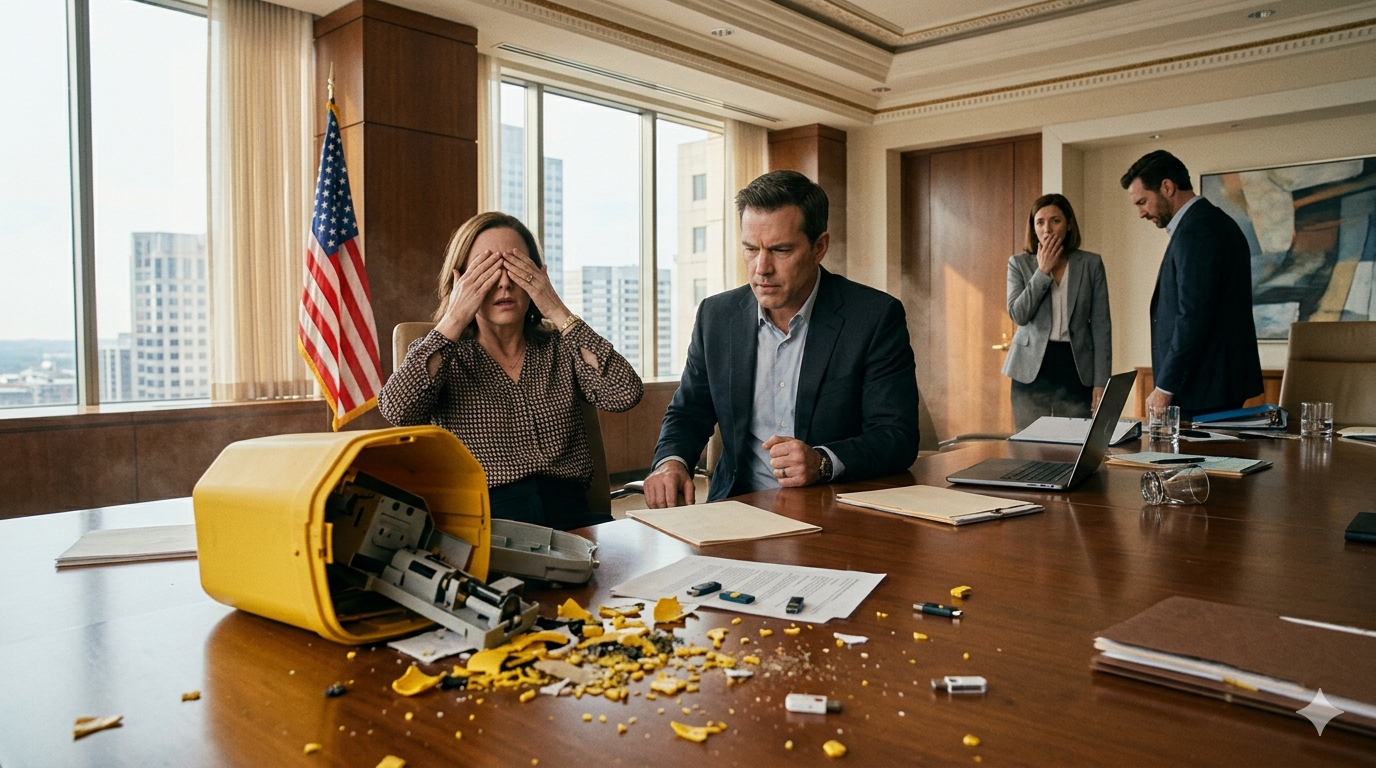
My Morning Sickness Saved My Daughter
My husband, the CEO of our company, walked into my office that morning carrying a lovingly prepared breakfast, and the gesture was so unlike him that the kindness itself felt wrong.
It was just after eight in the morning at Anderson Pierce Holdings, twenty floors above a gray Manhattan street where yellow cabs moved through a thin spring rain. Sunlight pushed through the wide glass windows of my corner office and landed across the mahogany desk my grandfather had once used when the company was still only a three-room logistics firm near the river.
I had come in early, as I always did. The building was still quiet. The assistants had only started turning on lights in the outer bullpen, the coffee machine in the corridor was just beginning to hiss, and the city beyond the glass looked washed and pale.
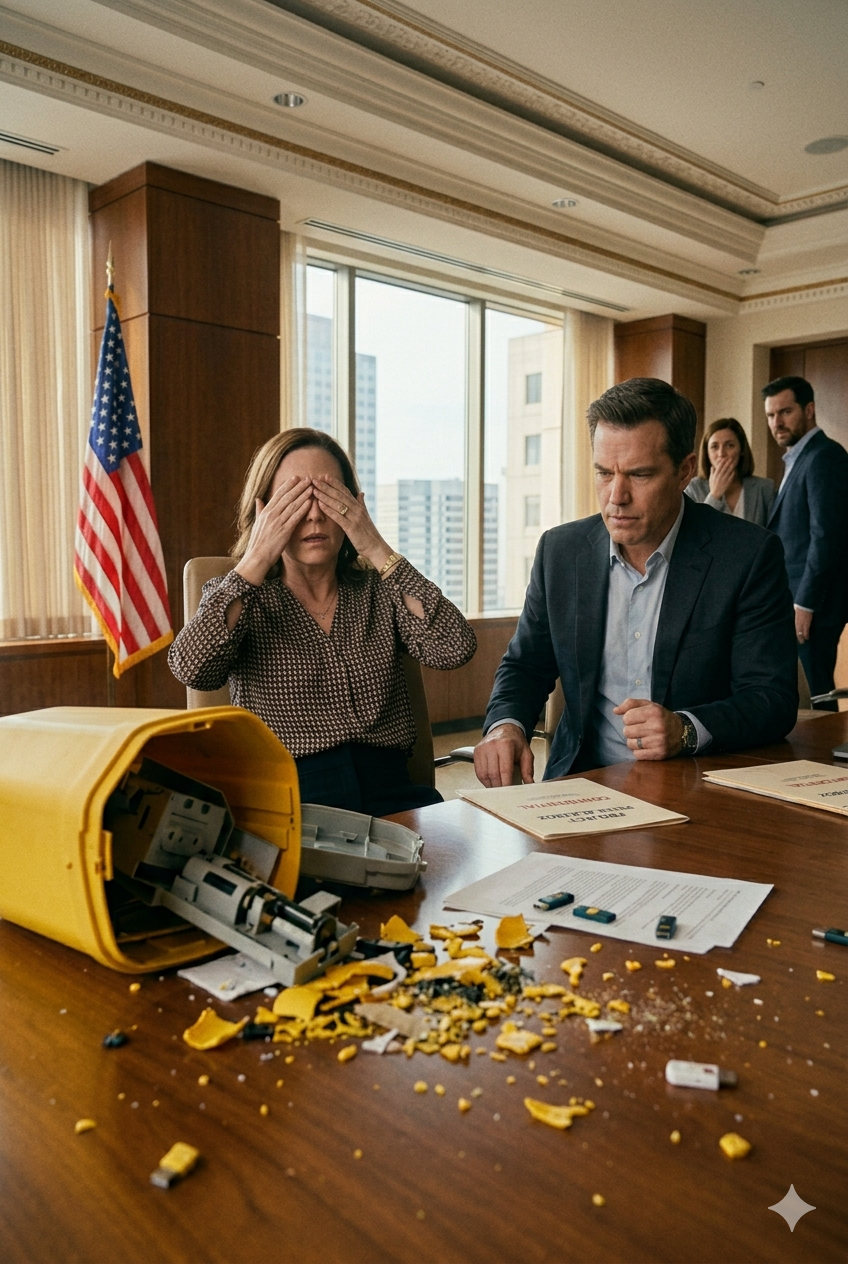
A stack of quarterly reports sat open in front of me. I had been trying to focus on shipping costs, insurance adjustments, and projections for a resort project Michael had been pushing too aggressively. But my body had other plans.
For three months, I had been carrying a secret.
I was pregnant.
No one at the office knew. Not even Michael. I had waited years for this child, and after so many disappointments, so many silent bathroom tears over negative tests, so many polite smiles at baby showers that broke me in private, I wanted to make sure everything was safe before I told anyone.
That morning, the tiny life inside me made its presence known with relentless force. Morning sickness came in waves that seemed to start in my bones. Anything strong—coffee, perfume, eggs, garlic, even the polished leather smell of Michael’s car—could turn my stomach in seconds.
So when my office door swung open and Michael stepped in with a pale blue insulated container in both hands, I did not feel touched at first.
I felt alarmed.
Michael Anderson was thirty-eight, polished, handsome, and gifted at looking sincere when people were watching. He wore a navy suit that probably cost more than most people’s rent. His dark hair was perfectly combed, his cuff links shone, and his smile was warm in the careful way a stage light is warm.
“Good morning, Kate,” he said.
He set the container on my desk with a soft, deliberate thud.
“Happy third anniversary. I wanted to do something special for you.”
I stared at him, then at the container.
For a moment, I could not speak.
Michael had not cooked for me in years. He barely noticed if I skipped dinner. He was always at meetings, business dinners, trips, calls, late nights, urgent strategy sessions. In public, he called me his partner. In private, he had become a stranger who checked his phone more often than he looked at my face.
Six months earlier, I might have cried from gratitude at a gesture like this.
That morning, every instinct in me tightened.
He opened the lid.
Steam rose into the air.
The smell hit me instantly—smoked chorizo, garlic, pepper jack cheese, onions, and greasy spice, all packed into a heavy breakfast skillet. To the old Catherine, it might have been comfort food. To the pregnant Catherine sitting behind that desk, it was a wall of nausea.
My throat closed.
I held my breath and forced myself not to gag.
Michael watched me closely.
“You’ve been looking pale lately,” he said, his voice gentle enough to sound loving from the hallway. “Work has been stressful. I woke up before dawn to make this. Your favorite comfort breakfast. Eat it before it gets cold.”
I pressed one hand against the edge of the desk, steadying myself.
“Thank you, Michael,” I said. “That’s thoughtful. But I had some toast at home. I’m still full.”
For one second, the warmth vanished from his face.
It was subtle. A tiny tightening near his mouth. A flash of impatience in his eyes.
Then he smiled again.
“Toast is nothing,” he said. “Have some of this. It’ll give you energy. I spent all morning on it.”
His tone stayed soft, but pressure sat underneath every word.
“Don’t do this to me, Kate.”
That sentence bothered me.
Not “Are you feeling okay?”
Not “Save it for later.”
Don’t do this to me.
I looked into his eyes and searched for tenderness. What I saw instead was expectation. Calculation. A man waiting for a result.
Before I could answer, someone knocked.
Jessica Miller stepped into my office holding a neat stack of contracts.
Jessica was twenty-seven, blonde, polished, and new to the company. Michael had hired her three months earlier as his personal assistant, though no one could explain why a CEO needed one more assistant when he already had two. She wore a cream pencil skirt, a fitted blouse, and the kind of bright smile that always seemed to arrive half a second before she did.
She placed the files on my desk, then noticed the open container.
“Oh, Mr. Anderson,” she said, her voice sweet and overly bright. “That is so thoughtful. Taking care of Mrs. Pierce this early in the morning? She’s very lucky.”
Her eyes flicked to him a little too long.
Michael did not answer her. He gave me a look, then stepped back toward the door.
“I have a call,” he said. “Eat while it’s hot.”
When he left, the room went quiet except for the faint hum of the vents and the distant clatter of keyboards coming to life outside.
I looked at the breakfast. The smell turned again in my stomach.
Then I looked at Jessica.
An idea came to me so quickly it felt like instinct.
I smiled.
“Jessica,” I said, pushing the container toward her, “I’m too full, and it would be a shame to waste Michael’s effort. Have you eaten yet?”
Her eyes widened.
For a second, she looked toward the door Michael had just closed, as if waiting for permission from someone who was no longer in the room.
Then she smiled.
“If you insist,” she said. “Thank you, Mrs. Pierce. Anything the CEO makes must be wonderful.”
She lifted the container like it was a trophy.
I watched her leave with it, and relief washed through me. I closed my eyes for a moment, breathed shallowly, and touched my stomach under the desk.
“We’re all right,” I whispered so softly no one could hear.
I tried to return to work.
Numbers blurred. My fingers hovered above the keyboard. Something about Michael’s face would not leave me alone. That strange insistence. The way he had watched the food. The way his smile had tightened when I refused.
I told myself I was being unfair.
Marriage can make a person suspicious when tenderness has been absent for too long.
But my body did not believe him.
Nearly an hour later, a heavy thud came from the open office floor.
Then a scream tore through the silence.
It was not an ordinary cry of surprise. It was sharp, terrified, and so full of pain that every conversation outside my office stopped at once.
My chair scraped backward.
I ran into the hallway.
Employees were rushing toward Jessica’s desk. Someone dropped a coffee mug. Someone shouted for help. Someone else fumbled with a phone, trying to call 911 with shaking hands.
Jessica was on the floor beside her chair.
The pale blue breakfast container had overturned near her hand, food spread across the carpet. She was curled in on herself, clutching her abdomen, her face drained of color. Her body trembled uncontrollably, and panic moved through the office like wind through dry paper.
I froze.
The food.
The breakfast Michael had made for me.
My mind went cold.
At that moment, Michael’s office door flew open.
He rushed out, but he did not run to Jessica. He did not ask what happened. He stopped several feet away, staring at the scene with a look that moved too quickly from shock to horror to fury.
Then his eyes locked on me.
I will never forget that look.
It was not the fear of a husband who thought his wife had almost been harmed. It was not even the concern of a boss for an employee in crisis.
It was the look of a man who had aimed at one target and watched the wrong person fall.
He crossed the floor and grabbed my arm hard enough to make me wince.
“What did you do?” he hissed.
I stared at him.
“What did I do?”
“Why her?” he said, his voice low and shaking. “Why did you give it to her?”
The office seemed to tilt around me.
Why her?
Not “Is she breathing?”
Not “Call an ambulance.”
Why her?
I pulled my arm free.
“I simply gave her the food you made for me,” I said, my voice steadier than I felt. “What are you thinking, Michael? Were you expecting me to be the one on the floor?”
His face changed.
He realized he had said too much.
Before he could recover, the ambulance arrived.
Paramedics moved fast. They asked questions, checked Jessica’s vitals, lifted her onto a stretcher, and rushed her toward the elevator. Michael followed, but before the doors closed, he turned back to me.
“You’re coming to the hospital,” he said. “This happened because of the food you handed her. Don’t even think about walking away from your responsibility.”
His words hit the hallway with perfect cruelty.
Employees looked at me.
Some with confusion.
Some with suspicion.
I stood in the middle of my own company, surrounded by whispers, while the man who had once promised to protect me tried to place the danger in my hands.
I went to the hospital.
Not because he ordered me to.
Because I needed to see what he would do next.
The emergency room waiting area smelled of antiseptic and old coffee. Fluorescent lights reflected off the tile. Michael paced near the doors like a trapped animal, his expensive shoes striking the floor in a tight rhythm.
He did not look like a worried employer.
He looked like a man calculating the fastest path out of a burning room.
At last, a doctor came through the double doors. He looked tired, serious, and careful.
Michael moved first.
“How is she?” he demanded. “Is she going to be all right?”
The doctor glanced at both of us.
“She arrived in time,” he said. “Her condition is serious, but stable.”
Relief passed across Michael’s face and disappeared almost instantly.
The doctor continued.
“However, the lab findings suggest the food contained a very high dose of a medication that can trigger severe uterine contractions.”
My hand went to my stomach.
The words landed one by one, each heavier than the last.
The doctor’s eyes moved to Michael.
“This was not ordinary food contamination. Because of the circumstances, we are required to notify law enforcement.”
Michael’s face drained of color.
Two officers arrived minutes later.
The older one asked calm, precise questions. The younger one took notes. Michael straightened his jacket and became, suddenly, the CEO again.
Polished. Controlled. Wronged.
“This morning,” he said, pointing toward me, “I prepared breakfast for my wife. She had the container in her office for some time before she gave it to Jessica. My wife has been under emotional stress lately. She may have acted out of jealousy.”
I felt something inside me break cleanly.
He had planned this part too.
If I had eaten the breakfast, I would have suffered quietly, and he would have called it a tragic medical event.
If anyone else ate it, he would make me the culprit.
The officer turned to me.
I took a breath.
“I never opened the container again after Michael left,” I said. “It sat on my desk in plain view until Jessica came in. Check the hallway cameras. Check the container. Check the food. And ask why a breakfast my husband insisted I eat contained that substance at all.”
The officer nodded.
Then the doctor returned with more information, and the room went still.
“Jessica Miller was six weeks pregnant,” he said quietly.
Michael collapsed into a chair.
His face went blank.
I understood then.
Jessica had been carrying his child.
And the breakfast intended for me had harmed the very secret he had created.
No satisfaction came to me. Only a sick, bottomless disgust. Michael’s affection, Jessica’s ambition, the polite smiles, the late nights, the lies—everything had led to a hospital corridor where innocent life had been treated like an inconvenience.
The officers separated us for questioning.
I told my story from the beginning. Michael repeated that he had cooked everything himself, that no one else had touched it before he brought it to me.
He thought that made him look devoted.
Instead, he was tightening the circle around himself.
When the first forensic update arrived, the conclusion was simple. The substance had been blended evenly through the hot food. It had not been added later in my office.
Michael’s face turned gray.
He tried to change his story.
Maybe Jessica had taken something herself. Maybe she had put it in the food. Maybe I had found a way. Maybe everyone had misunderstood.
The more he spoke, the smaller he became.
I left the hospital before he could corner me again.
I did not go home.
I went back to the office.
Rain streaked down the windows. The lobby was full of whispers. People stopped talking when I passed. By the time I reached my floor, rumors had already grown teeth.
Some said the CEO’s wife had been jealous.
Some said Jessica had tried to trap Michael.
Some said the whole thing would ruin the company.
I closed my office door and stood in silence until a soft knock came.
Sarah Chen entered.
Sarah had worked with me since before Michael married into the company. She was brilliant, loyal, and never dramatic unless the facts demanded it.
That day, her face was pale but determined.
She placed a USB drive on my desk.
“I secured the building footage,” she said. “You need to see this.”
On the monitor, Michael’s car entered the parking garage at 7:15 a.m.
But he did not appear on our office floor until 8:15.
One full hour was missing.
Sarah clicked to another camera angle.
A man in a white shirt and face mask moved through the basement stairwell carrying a black trash bag. He avoided the usual bins and headed toward the back service area.
I recognized the posture immediately.
Kevin Johnson.
Michael’s assistant. His distant cousin. His shadow.
“Why would Kevin sneak through the emergency stairs with trash at that hour?” Sarah asked.
I did not answer.
The answer sat cold between us.