
At My Son’s Wedding, His Bride Told Me To Leave
At my son’s wedding, a one-hundred-thousand-dollar event I paid for, his bride told me to leave.
She called me an embarrassment in front of her friends.
Within the hour, the lights came on, the music stopped, and every vendor payment was canceled. Their dream day turned into a financial nightmare right before their eyes.
But that was just the beginning.
What I did next would dismantle the entire future they thought they had bought with my money.
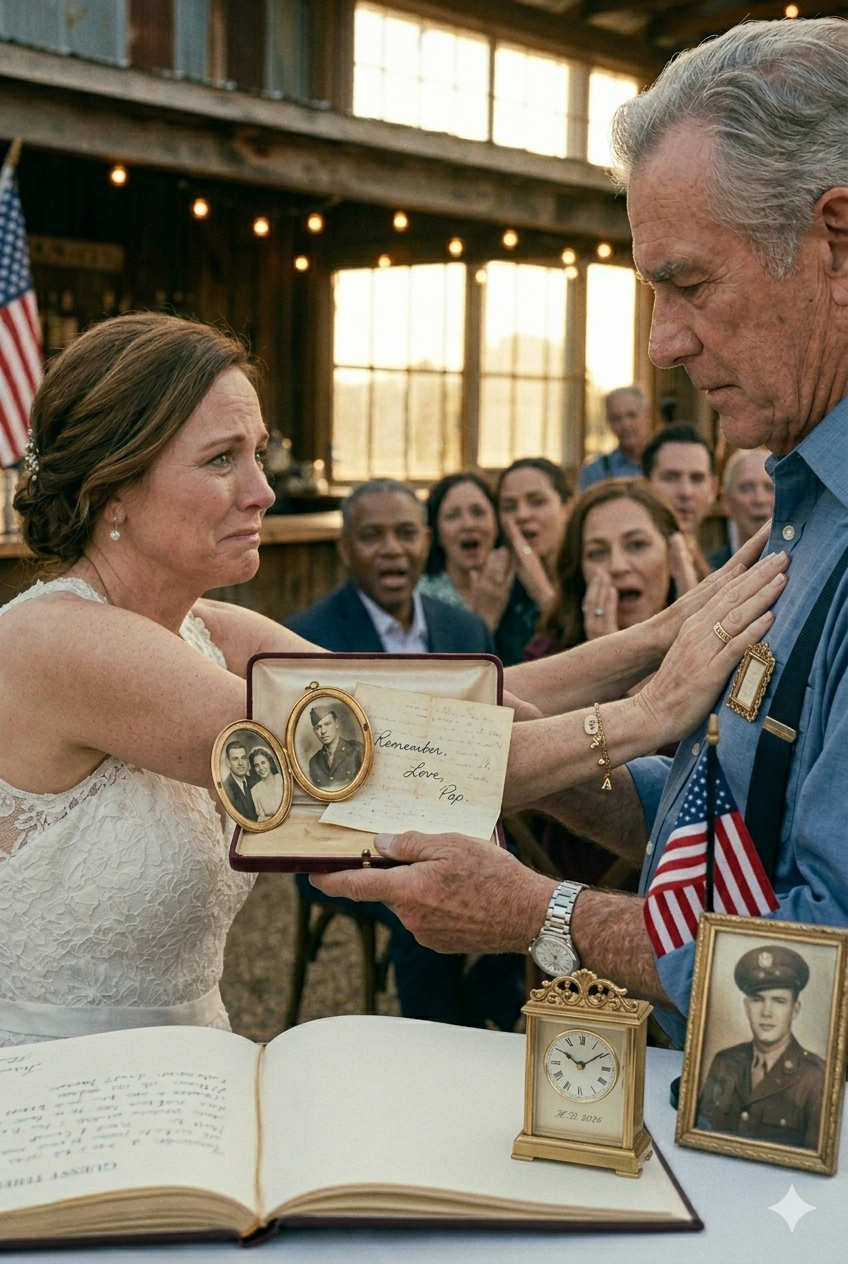
The late afternoon sun slanted through the glass walls of the Austin Botanical Gardens main hall, turning the champagne in a hundred flutes to liquid gold.
From my corner table, I watched my son, Leo, move through the crowd.
At twenty-nine, he wore his custom tuxedo like a second skin, easy and confident, as if the room had been built around him. Beside him, his new wife, Amelia, was a vision in white lace, her smile a carefully constructed piece of architecture.
I should have felt nothing but pride.
I had built this.
Not just the party, but the man himself.
Every custom floral arrangement, every bottle of French champagne, every folded linen napkin and gold-rimmed plate was a testament to the overtime shifts I had pulled, the vacations I had skipped, and the steady, quiet work of a lifetime building a construction company from nothing.
My wife, Caroline, would have loved this.
She would have seen the beauty and ignored the cost.
But she also would have seen the look in Amelia’s eyes every time Amelia glanced my way.
It was not the warmth of a new daughter.
It was the cool, appraising glance of an investor checking on an asset.
I was the asset.
And my purpose, I was beginning to realize, was about to expire.
The first crack in the perfect facade came quietly.
A young waiter, no older than nineteen, was navigating a tight space between tables when an impatient guest stepped back without looking.
The waiter stumbled.
His tray of empty glasses went down with a sharp, sickening crash.
A wave of gasps and annoyed murmurs rippled through the room. The boy’s face went white, then crimson. He knelt, fumbling with the larger shards of glass, his hands shaking.
I saw the venue manager start to move toward him, her face a mask of polite fury.
I knew that look.
I had seen it on foremen about to fire a kid for a simple mistake.
Without thinking, I stood and walked over.
I knelt beside the boy, my old knees protesting.
“Easy, son,” I said, keeping my voice low. “Let’s get the big pieces first. Don’t use your hands.”
I took a linen napkin from a nearby table, folded it thickly, and started carefully gathering the larger shards.
The boy looked at me, his eyes wide with a mixture of terror and gratitude.
“Thank you, sir,” he whispered. “I’m so sorry.”
“Accidents happen,” I said. “Just breathe. It’s only glass.”
That was when Amelia arrived.
She moved with the silent speed of a predator.
“What on earth are you doing?” she hissed.
Her voice was a razor blade wrapped in silk. Her smile was still in place, but it did not touch her eyes.
I looked up from the floor.
“He needed a hand, Amelia.”
Her perfectly manicured fingers gripped my arm.
“Get up,” she ordered, her voice dropping lower. “You’re making a scene.”
She pulled me to my feet and steered me toward a quiet alcove behind a massive fern. A few guests watched, their curiosity thinly veiled behind polite smiles.
“You are embarrassing me,” she said, her words tight and clipped. “My father-in-law on his hands and knees cleaning up after the help.”
“The boy could have cut himself,” I said, keeping my own voice level.
“That is not your concern,” she snapped. “Your concern is to look like you belong here, and right now you look like one of them.”
She gestured vaguely back toward the staff.
“This is my wedding, Frank, not your construction site. I will not have our guests thinking my husband’s father is a common laborer.”
The cruelty of it was so clean, so precise, that it left me breathless for a second.
I looked for my son.
Leo was standing ten feet away near the bar, watching.
He saw the whole thing.
He met my eyes for a fraction of a second, a flicker of shame in his before he looked down at his drink and turned his back.
He chose his side.
He chose her.
Amelia saw it too, and a look of triumph hardened her face.
“I think it’s best if you leave,” she said, her voice now filled with the cold authority of a queen dismissing a servant. “You’ve done your part. You paid. Now you can go.”
She paused, letting every word settle.
“You are not welcome here. Go away.”
I did not say a word.
There was nothing left to say.
Her pronouncement hung in the air between us, absolute and final. I looked at her, at the beautiful, expensive woman my son had chosen, and I saw the future she had planned.
It was a future that had no room for a simple man with calloused hands and a worn-out suit.
I gave one slow nod.
Then I turned and walked away.
I did not look back.
I walked through the grand hall, past the smiling guests, past the towering cake I had paid for, past the string quartet playing a song Caroline and I used to dance to in the kitchen.
Each step was deliberate.
I could feel their eyes on my back.
The whispers started to bloom in my wake.
At the main entrance, I handed the valet my ticket without a word and waited.
When my Ford F-150 pulled up, clean but undeniably a work truck, it sat among the gleaming BMWs and Mercedes like the truth in a room full of expensive lies.
I saw Amelia watch from the doorway, her lips curled into a faint smirk.
It was the final perfect insult.
I got in the truck.
The familiar scent of leather and sawdust wrapped around me, a small comfort.
I pulled out of the long curved driveway and onto the main road, but I did not head for the highway.
I did not go home.
I drove just far enough to be out of sight, then pulled over under the shade of a large oak tree.
My hands were steady on the steering wheel.
The hurt was a physical thing, a cold, heavy stone in my chest.
But beneath it, something else was starting to burn.
Not rage.
It was colder than that.
It was clarity.
For years, I had made excuses for Leo.
For his selfishness.
For his casual disregard.
For the way he took and took and never gave back.
I had told myself he was young, that he would grow out of it. I had told myself my job was to provide, to smooth his path, to protect him from hardship.
I saw now that I had not been smoothing his path.
I had been paving it with my own life.
And he had just handed the deed to Amelia.
I reached into the glove compartment and pulled out a slim leather-bound notebook and a second older cell phone, a simple no-frills burner phone I kept charged for emergencies.
I flipped open the notebook.
Inside, in my neat block handwriting, was a list.
Every vendor for the wedding.
The venue.
The caterer.
The florist.
The band.
The photographer.
Next to each name was a contract number, a contact person, and the details of the payment arrangement.
I had made sure every single contract was in my name, signed by me.
I had made sure every payment was scheduled to be drawn from a specific business account that I, and only I, controlled.
I picked up the burner phone.
My thumb hovered over the first number on the list.
The bank’s twenty-four-hour business line.
Amelia wanted me to disappear.
Fine.
I would grant her wish.
And I would start by making her perfect, expensive wedding disappear first.
The show was over.
It was time to strike the set.
The engine of my F-150 was silent. In the sudden quiet of the truck’s cabin, the only sounds were the soft ticking of the hazard lights I had left on and the frantic thumping of my own heart.
For a full minute, I just sat there, my hands gripping the steering wheel, the echo of Amelia’s words still ringing in my ears.
Go away.
The raw hurt was a physical thing, a pressure building behind my ribs. But as the seconds ticked by, the hurt began to cool, crystallizing into something hard, sharp, and clear.
It was the clarity that comes after a lifetime of making excuses for someone you love.
It was the clarity of a final straw.
I reached over and popped open the glove compartment again. I did not reach for a flask or a tissue.
I pulled out the worn leather-bound notebook and the second cell phone.
This, I realized, was the emergency I had been subconsciously preparing for all along.
I flipped open the notebook.
My own neat, blocky handwriting filled the pages.
It was not a diary.
It was a ledger.
A record.
Every major expense I had covered for Leo since he graduated college.
Every loan that was never repaid.
And on the last few pages, a detailed breakdown of the wedding.
Vendor.
Contact.
Contract number.
Payment method.
I had made sure every single agreement was signed by me, Frank Miller. I had made sure every deposit and every scheduled payment was made from the Miller Construction corporate account, an account to which I and only I had access.
Leo and Amelia had been so busy enjoying the fruits of my labor, they never bothered to ask how the bills were actually being paid.
They just assumed the money was theirs.
An allowance.
An inheritance they were collecting early.
It was time to correct that assumption.
I took a slow, deep breath, the cold Texas air calming the fire in my chest.
Then I picked up the burner phone and dialed the first number on my list.
The call connected on the second ring.
“Twenty-four-hour business banking. This is Mark Peterson.”
“Mr. Peterson, this is Frank Miller,” I said, my voice as calm and steady as if I were ordering lumber. “I need to activate Protocol Wintergreen on the Miller Construction account ending in 7741.”
There was a pause.
Then the sound of typing.
“Understood, Mr. Miller. Protocol Wintergreen. Can you confirm the authorization code?”
“Caroline, 1985.”
I said the name of my late wife and the year we were married. The words caught in my throat for just a second.
“Confirmed,” he said, his own voice professionally flat. “Protocol activated. What are your instructions?”
“I need an immediate stop and reversal on all debit authorizations made in the last seventy-two hours to the following vendors.”
I read them off the list.
“Austin Botanical Garden. Gilded Lily Catering. The Starlight Quartet. Visions in White Floristry.”
“Understood, Mr. Miller. All payment authorizations to those entities from account 7741 are now revoked. Is there anything else?”
“No,” I said. “That will be all.”
I ended the call.
One down.
Four to go.
My next call was to the venue manager, a woman named Susan Henderson.
“Good evening, Austin Botanical Garden,” she answered, her voice polished and polite.
“Mrs. Henderson, this is Frank Miller calling. I am the signatory on contract number 1023B for the Miller wedding.”
“Oh, yes, Mr. Miller. Is everything all right? A beautiful event.”
“The event is over,” I said, my tone leaving no room for argument. “Pursuant to Clause 7B of our agreement regarding payment authorization, I am informing you that final payment has been withdrawn. The contract is terminated effective immediately.”
The silence on the other end was heavy with shock.
“I… I don’t understand, Mr. Miller. The reception is still underway.”
“That is no longer my concern,” I said. “For collection of any and all outstanding fees, you will need to speak with Mr. and Mrs. Leo Miller directly. Good evening.”
I disconnected before she could protest.
The next three calls were even shorter.
To the caterer.
To the bandleader.
To the florist.
The message was the same.
Payment has been canceled.
The contract is voided.
Please direct all invoices to the bride and groom.
Back inside the grand hall, the first sign that the world had tilted on its axis was the music.
The Starlight Quartet was halfway through a soft romantic melody when the lead violinist faltered, tapped his music stand, and looked back at his colleagues with a confused frown.
He put his instrument down.
The others followed.
The sudden silence was jarring.
Then the house lights flashed on, flooding the room with a harsh, unflattering glare. The warm candlelit ambiance evaporated, replaced by the sterile brightness of a cafeteria.
A nervous murmur spread through the guests.
Amelia was in the middle of a story, laughing with a group of friends, when the lights changed.
Her laugh died in her throat.
She looked around, her face a mask of confusion and annoyance.
That was when the staff started clearing the tables.
Not subtly.
With quiet, unnerving efficiency.
Waiters began removing half-full glasses of champagne. Bussers started clearing plates even as guests were still eating.
“What is going on?” Amelia demanded, her voice rising as she spotted Mrs. Henderson marching toward her, a clipboard clutched in her hand.
Leo intercepted her first.
“Susan, there must be some mistake. The lights, the music—”
“There is no mistake, Mr. Miller,” Mrs. Henderson said, her voice as cold and polished as the marble floor.
She did not look at Leo.
Her eyes were fixed on Amelia.
“We just received a call from the contract holder, Mr. Frank Miller. He has revoked all payments. Per his instructions, and our contract, this event is terminated.”
Amelia’s jaw dropped.
“He what?”
“He has revoked the payments.”
“He can’t do that.”
“He can, Mrs. Miller,” Mrs. Henderson said. “And he has.”
Then she lifted the clipboard.
“Now there is the matter of the outstanding balance. For services rendered, plus the contractual fee for premature termination, the total comes to $65,700. We accept all major credit cards.”
Just then, the head caterer appeared, his white chef’s coat stained with sauce and frustration.
“Mrs. Miller,” he said, waving an invoice. “My payment was just declined. I have a bill here for twelve thousand dollars.”
The bandleader was right behind him.
Then the florist.
Each one held a piece of paper.
Each piece of paper had a number with a lot of zeros.
“This is insane,” Leo stammered, fumbling for his wallet. “It’s a misunderstanding. I’ll handle it.”
He pulled out his own credit card, a platinum one I knew he was proud of, and handed it to Mrs. Henderson.
The silence was absolute as she swiped it.
A moment passed.
Then came the small, quiet, terrible sound of a declined transaction.
“I’m sorry, sir,” she said, not sounding sorry at all. “This card has been rejected.”
Leo stared at the card as if it had betrayed him.
He looked at Amelia, his face pale with panic.
The color had drained from her face too, leaving a splotchy white mask of pure rage. Her hands, resting on the table, clenched into white-knuckled fists.
The dream wedding she had curated so perfectly, the one designed to launch her into a new social stratosphere, had just publicly and spectacularly imploded.
All around them, guests were grabbing their coats, whispering, and trying not to stare as they fled.
Back in my truck, I watched my phone light up.
Leo.
Then Amelia.
Then Leo again.
I pressed the silence button and put the phone face down on the passenger seat.
I started the engine.
The familiar rumble of the V8 was a comforting sound.
I had pulled the pin.
Now all I had to do was drive away and listen to the distant sound of the explosion.
I did not drive home after leaving the wedding.
Home was a place of memories, a place Caroline and I had built, and I was not ready to let the evening’s ugliness seep into its walls.
Instead, I drove to the one place in Austin that always felt as quiet and serious as my own thoughts.
My office.
The Miller Construction Building was dark and silent on a Saturday night, a three-story monument to a lifetime of blueprints, deadlines, early mornings, and hard decisions.
I let myself in.
The familiar click of the lock was a comforting sound in the stillness.
I did not turn on the overhead lights, just the small lamp on my old oak desk.
The room smelled of sawdust, coffee, and the faint clean scent of paper.
This was where I had always done my real thinking.
The adrenaline from the phone calls had faded, leaving behind a profound calm.
I had set the dominoes in motion.
Now I just had to wait for them to fall.
It brought me no joy to do this.
But a foundation built on lies cannot stand.
My only job now was to oversee the controlled demolition.
The first call of the new day came not to me, but to my lawyer, David Chen, at seven o’clock Monday morning.
I was already in his downtown office when he took it, nursing a cup of coffee strong enough to hold up a nail.
David was more than a lawyer.
He was a friend of thirty years, a man whose mind was as sharp and clean as the crease in his trousers.
He listened, nodded, and gave only one quiet response.
“Understood.”
He hung up and looked at me.
“That was Susan Henderson from the venue.”
“She sounds stressed,” I said.
“She confirmed they presented Mr. and Mrs. Leo Miller with an invoice for sixty-five thousand dollars, which they were unable to pay.”
David allowed himself a small, rare smile.
“Protocol Wintergreen was a success. Is Phase Two green-lit?”
“It is,” I said. “Let’s review the architecture one more time.”
What Leo and Amelia never understood, what I had perhaps hidden too well, was the nature of the gilded cage I had built around my son.
I had hoped it would be a launchpad for him, a foundation from which he could build something of his own.
Instead, it had become a comfortable hammock, and he had invited Amelia to lie in it with him.
Leo believed he was a rising executive at a dynamic tech startup called InnovateX.
What he never bothered to learn was that the primary seed funding for InnovateX came from a quiet venture capital firm, which was in turn wholly owned by a trust I controlled.
The investment agreement, which David had drafted himself, contained a tightly worded morality clause.
Clause Twelve.
It allowed the primary investor to force a personnel review if an employee’s conduct brought disrepute upon the company or its stakeholders.
I was the primary investor.
I was the stakeholder.
They were also looking forward to moving into a stunning penthouse apartment downtown after their honeymoon.
They had told all their friends they were in the process of buying it.
The truth was simpler.
The penthouse was owned by Miller Construction.
Leo was living there under a symbolic one-hundred-dollar-a-month lease agreement, a document he had signed without reading because he simply assumed it was another one of his father’s endless gifts.
And the gleaming BMW he drove, the one he used to impress clients and Amelia’s parents, was a company car, registered and insured by my company, assigned to him for business purposes.
All of it was mine.
Not in a sentimental way.
In a legal, binding, irrefutable way.
I had built the stage, paid for the actors, and written the script.
They had simply forgotten who the director was.
“All right,” David said, turning to his computer. “Let’s begin.”
He drafted the first email.
It was a masterpiece of corporate politeness and veiled threat, addressed to the CEO of InnovateX. It referenced my controlling interest through the venture capital fund and formally invoked Clause Twelve, citing recent public behavior by Leo Miller that constituted a significant reputational risk.
It requested an immediate suspension pending a full review.