
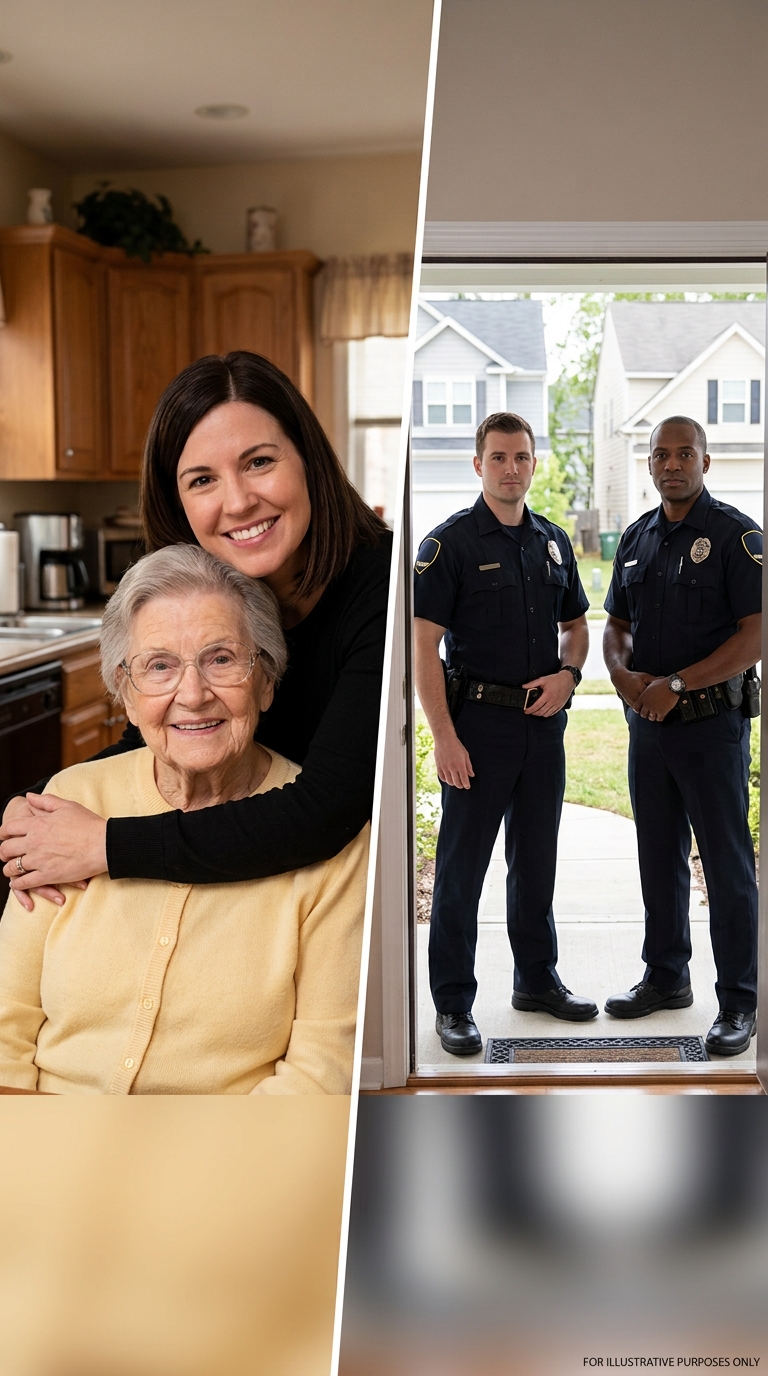
People often say that neighbors become like family, but I never truly understood what that meant until I met Mrs. Eleanor Whitmore.
If someone had told me that an ordinary knock on an old woman’s front door would completely change my life, I would have smiled politely and dismissed the idea. Back then, I wasn’t looking for friendships. I wasn’t looking for purpose.
I was simply trying to survive.
My name is Claire.
I’m thirty years old, and for a long time, my little white house sat quietly at the end of Maple Street like a place the world had forgotten.
It wasn’t always that way.
There had once been laughter echoing through those rooms.
Tiny footsteps racing down the hallway.
A husband who kissed me goodbye every morning before work.
A little girl named Lily whose giggle could brighten even the darkest day.
Then illness arrived without warning.
Cancer doesn’t just steal lives.
It steals futures.
It steals marriages.
It steals the version of yourself you thought you’d always be.
By the time my daughter lost her battle at only six years old, my husband and I were barely speaking.
Grief settled between us like an unwelcome guest that refused to leave.
Within a year, our marriage collapsed beneath the weight of everything we’d lost.
He moved across the country.
I stayed behind because I couldn’t bear leaving the house where Lily had lived.
The neighborhood grew quieter each year.
Or maybe it was just me.
I stopped attending neighborhood barbecues.
Stopped decorating for holidays.
Stopped answering invitations.
Most evenings, I’d sit on my porch with a cup of tea, watching life continue for everyone else.
That’s when I first noticed the mail.
Across the street stood a charming brick house with blue shutters and an overflowing flower garden that somehow always looked beautiful despite its owner’s age.
Mrs. Eleanor Whitmore lived there alone.
She was eighty-two years old.
I’d wave occasionally.
She’d wave back.
Neither of us ever said much more.
Then one Monday morning, I noticed newspapers piling up beside her front steps.
Tuesday came.
The newspapers remained.
By Wednesday, several envelopes had joined the growing stack.
Something didn’t feel right.
I walked across the street and knocked.
No answer.
I knocked again.
Still nothing.
Just as panic began creeping into my chest, I heard slow footsteps approaching.
The door opened only a few inches.
An elderly woman with silver hair and tired blue eyes peered out.
“Oh,” she said softly. “I must have fallen asleep again.”
Relief washed over me.
“I’m sorry to bother you,” I said. “I just noticed your mail.”
She looked past me toward the porch.
“Oh dear.”
She laughed quietly.
“I suppose I forgot about it.”
Her laugh was warm but fragile.
It carried loneliness.
“I can help bring it inside,” I offered.
She hesitated.
Most people her age had been warned not to trust strangers.
Then she smiled.
“I’d appreciate that.”
That was all it took.
One small act.
One ordinary afternoon.
One decision neither of us realized would change everything.
Inside her home, time seemed frozen.
Family photographs lined every shelf.
Awards.
Travel souvenirs.
Beautiful antique furniture polished with obvious care.
Yet despite the lovely surroundings, the house felt painfully empty.
“I made tea,” she said.
“I hope you’ll stay.”
I almost refused.
I had groceries melting in the car.
Laundry waiting.
Television shows to distract myself from another silent evening.
Instead, I sat down.
That cup of tea lasted nearly three hours.
She told me stories about growing up during difficult times.
About meeting her husband at a church picnic.
About raising three children.
About traveling across Europe after retirement.
I listened.
Really listened.
When I finally stood to leave, she smiled in a way that made her seem twenty years younger.
“I haven’t talked that much in months.”
The words broke something inside me.
Because neither had I.
…
After that day, helping became routine.
At first it was little things.
Picking up groceries.
Driving her to doctor’s appointments.
Replacing batteries in smoke detectors.
Changing light bulbs she couldn’t safely reach.
Soon those visits became daily.
I’d stop by after work.
We’d eat dinner together.
Sometimes we’d watch old movies.
Other nights we’d work crossword puzzles neither of us could finish alone.
She loved detective shows.
I preferred documentaries.
We compromised by alternating every evening.
She always cheated at Scrabble.
She insisted “creative spelling” deserved bonus points.
I never argued.
Watching her laugh was worth losing every game.
Slowly, the walls around my own heart began crumbling.
One rainy afternoon, while sorting old photo albums, she pointed toward a smiling little girl in one of my wallet pictures.
“Tell me about her.”
I stared at Lily’s photograph for several long seconds.
Nobody had asked about my daughter in years.
Most people avoided the subject.
They feared reopening old wounds.
Mrs. Whitmore simply waited.
No pressure.
No pity.
Just patience.
So I told her everything.
About Lily’s love for butterflies.
About bedtime stories.
About hospital rooms filled with stuffed animals.
About holding my little girl’s hand during her final moments.
When I finished, tears streamed silently down my face.
Mrs. Whitmore reached across the table.
She squeezed my hand.
“You never stop being someone’s mother.”
That single sentence healed a piece of me therapy never could.
…
As months passed, I noticed something else.
Her children rarely visited.
When they did, they never stayed long.
The oldest daughter, Patricia, always walked through the house commenting on expensive antiques.
“Mom, you should really sell this cabinet.”
“The silver collection must be worth a fortune.”
“We need to discuss your investments.”
Not once did she ask how her mother was feeling.
The younger daughter, Denise, constantly reminded Mrs. Whitmore about updating legal paperwork.
The son, Michael, rarely looked up from his phone.
One afternoon, after they’d left, Mrs. Whitmore sighed.
“They only remember my birthday because they think it keeps them in the will.”
I didn’t know what to say.
She smiled sadly.
“I love them.”
“They’re my children.”
“But somewhere along the way…”
She paused.
“They stopped seeing me as their mother.”
“They started seeing me as an inheritance.”
…
Years passed.
Three of them.
Three beautiful years filled with ordinary moments that somehow became extraordinary.
Birthday cakes.
Christmas dinners.
Garden planting in spring.
Watching autumn leaves drift across her porch.
She attended Lily’s memorial with me every year.
I attended every doctor’s appointment with her.
People around town started assuming we were related.
Eventually we stopped correcting them.
Family isn’t always born.
Sometimes it’s built.
One quiet October evening, she handed me an envelope.
“If anything happens to me…”
I immediately pushed it back.
“Don’t.”
She smiled.
“Promise.”
Reluctantly, I nodded.
She placed it inside her desk drawer.
“My attorney knows.”
Then she changed the subject.
…
A month later, I found her peacefully asleep in her favorite chair.
She never woke up.
The paramedics confirmed she’d passed quietly during the night.
I cried harder than I had in years.
Planning her funeral felt impossible.
Yet I knew exactly what she would have wanted.
Her favorite church choir.
White lilies instead of roses.
Fresh butter cookies from the neighborhood bakery.
Soft piano music.
Blue hydrangeas.
Everything reflected the gentle woman she’d been.
Her children barely participated.
Instead, they whispered among themselves.
They asked about house deeds.
Insurance.
Bank accounts.
Jewelry.
Even during the visitation, I caught Patricia opening cabinet drawers while guests offered condolences.
It made me sick.
Still, I kept silent.
Mrs. Whitmore deserved peace.
Not another family argument.
The funeral ended beautifully.
Everyone praised the service.
Many people approached me afterward.
“You cared for her like family.”
“She adored you.”
“She was lucky to have you.”
I thanked them quietly.
Eventually, exhausted, I drove home.
I placed my purse on the kitchen counter.
Collapsed into bed.
And cried myself to sleep.
…
The next morning, violent pounding rattled my front door.
Not knocking.
Pounding.
I looked through the window.
Two police officers stood outside.
Beside them…
Patricia.
She wore an expression I’d never forget.
Triumph.
The moment I opened the door, she pointed directly at me.
“That’s her.”
“She stole my mother’s diamond necklace.”
For several seconds, I couldn’t process the accusation.
“What?”
“The family heirloom is missing.”
“You were alone with Mom’s belongings.”
“You took it.”
One officer stepped forward.
“Ma’am, we’d like permission to search your home.”
I moved aside immediately.
“I have nothing to hide.”
They searched every room.
Every drawer.
Every closet.
Nothing.
Then one officer picked up the purse I’d carried to the funeral.
He opened a side pocket.
Reached inside.
Pulled out a small velvet pouch.
My stomach dropped.
Inside lay an enormous diamond necklace sparkling beneath the living room lights.
The room fell silent.
“I’ve never seen that before.”
Even I could hear how weak those words sounded.
Patricia crossed her arms.
“I told you.”
The handcuffs clicked around my wrists.
Neighbors watched through curtains.
Others stood openly on their porches.
Humiliation burned hotter than fear.
I wasn’t just being arrested.
I was being publicly branded a thief.
…
The police station smelled of stale coffee and paperwork.
Detective Harris spread photographs across the table.
“You had access.”
“You organized the funeral.”
“You handled personal belongings.”
“You were named in her records.”
I blinked.
“What records?”
He ignored the question.
Everything pointed toward me.
Opportunity.
Access.
Possession.
Except…
I hadn’t done it.
Hours passed.
Then, suddenly…
A memory surfaced.
At the funeral home…
I’d left my purse unattended several times while greeting guests.
One moment flashed vividly into my mind.
I’d walked toward the entrance to comfort an elderly friend.
My purse remained on a chair beside the guest book.
Nobody had been watching it.
I looked directly at Detective Harris.
“Security cameras.”
He frowned.
“The funeral home.”
“They have cameras.”
“My purse was alone.”
“Please.”
He stared at me for a long moment.
Finally…
He made a phone call.
…
Several hours later we sat inside a small viewing room.
Grainy black-and-white footage appeared on the monitor.
Time stamp.
2:14 p.m.
There I was.
Greeting guests.
Smiling politely.
Walking away from my purse.
Ten seconds passed.
Twenty.
Then…
Patricia entered the frame.
She glanced left.
Then right.
Her movements were cautious.
Deliberate.
She reached inside her coat.
Removed something wrapped in cloth.
Opened my purse.
Slipped the object into the side pocket.
Closed the zipper.
Walked away as though nothing had happened.
Nobody spoke.
Detective Harris rewound the footage.
Played it again.
Then again.
Every replay made the truth more obvious.
Patricia hadn’t discovered evidence.
She had created it.
…
The interrogation that followed lasted less than an hour.
Faced with undeniable video evidence, Patricia finally broke.
Between sobs, she confessed everything.
Three weeks before her mother’s death, Mrs. Whitmore had quietly updated her will.
Her attorney had witnessed every signature.
She was of sound mind.
Perfectly competent.
Legally protected.
She had left substantial gifts to local charities.
Smaller gifts to longtime friends.
And nearly forty percent of her estate…
To me.
Not because I’d asked.
Not because I’d expected it.
But because, as she’d written herself:
“Claire gave me something my own children forgot to give.”
“Time.”
“Kindness.”
“Dignity.”
When Patricia and her siblings learned about the will after the funeral, panic consumed them.
Their attorney warned them that contesting it would likely fail.
Unless…
They could prove I had manipulated or exploited their mother.
A theft conviction would destroy my credibility.
It would paint me as someone who preyed upon vulnerable seniors.
The inheritance could be challenged.
They would receive everything.
So Patricia stole the necklace herself.
Planted it inside my purse.
Filed a police report.
And expected the evidence to speak for itself.
She never imagined security cameras had captured every second.
…
The charges against me disappeared immediately.
Patricia was arrested for filing a false police report, tampering with evidence, obstruction of justice, and attempting to frame an innocent person.
Her siblings insisted they hadn’t known she’d planted the necklace.
Whether that was true or not, investigators uncovered text messages discussing ways to “make Claire look guilty.”
Their carefully crafted plan unraveled within days.
The local newspaper eventually published a correction clearing my name.
Neighbors who had avoided eye contact began apologizing.
Some brought flowers.
Others baked pies.
I appreciated the kindness.
But reputations, once damaged, never recover overnight.
…
A week later, Mrs. Whitmore’s attorney invited me to his office.
After handling the legal paperwork, he quietly slid a sealed envelope across the desk.
“My client instructed me to give you this only after everything was settled.”
My hands trembled as I opened it.
Inside was a handwritten letter.
Claire,
If you’re reading this, then I’m finally where I’ve long believed your sweet Lily has been waiting.
Don’t cry too long.
I’ve had eighty-two wonderful years.
That’s more than many people receive.
I need you to understand something.
The money I’m leaving you is not payment.
No amount of money could ever repay three years of companionship.
You gave me breakfasts that weren’t lonely.
Conversations that mattered.
Laughter that echoed through an empty house.
You reminded me that growing old didn’t mean becoming invisible.
Most people think love is measured by blood.
They’re wrong.
Love is measured by presence..
By who shows up when there’s nothing to gain.
By who stays after everyone else leaves.
You never once asked what I owned.
You only asked how I was feeling.
That is why I chose you.
Not because you needed my money.
Because you deserved my gratitude.
Please promise me one thing.
Don’t let my children’s bitterness convince you that kindness isn’t worth the risk.
The world needs more people willing to care for strangers.
Be that person.
Always.
With all my love,
Eleanor
By the time I reached the bottom of the page, tears blurred every word.
Not tears of sorrow alone.
But gratitude.
…
Months passed.
The legal battles ended.
The estate settled exactly as Mrs. Whitmore intended.
I used part of the inheritance to establish a community volunteer program connecting elderly residents living alone with neighbors willing to help.
The waiting list surprised everyone.
Apparently, loneliness had been quietly growing throughout our town for years.
People simply needed someone to make the first move.
Mrs. Whitmore’s home wasn’t sold.
Instead, I transformed it into a welcoming gathering place where seniors could share meals, play cards, attend book clubs, and simply spend time together.
Every Wednesday afternoon, we served her favorite butter cookies alongside hot tea.
Her rocking chair remained on the front porch.
No one ever moved it.
Sometimes, after everyone had gone home, I’d sit there as the sun slipped behind the trees, listening to birds settle into the evening.
I could almost hear her gentle laugh drifting through the garden.
And every time I looked across the quiet street toward the little house where my own journey had begun, I remembered the lesson she had given me without ever trying to teach it.
Family isn’t always the people who share your last name.
Sometimes it’s the person who notices your unopened mail.
The one who stays when everyone else is too busy.
The one who listens without judgment.
The one who chooses compassion when there is nothing to gain.
Blood may create relatives.
But love, kindness, and simply showing up for another human being—
Those are the things that create family.
And no amount of greed could ever steal that inheritance away.